
Late on the night of July 11, 2026, Columbus police responded to the 3000 block of Quinby Drive on the city’s east side. They found 21-month-old Jashawn Butler on the front porch, suffering from an apparent gunshot wound. His mother and aunt were performing CPR when officers arrived. Medics transported him to Mount Carmel East hospital. Jashawn died shortly after midnight on July 12.
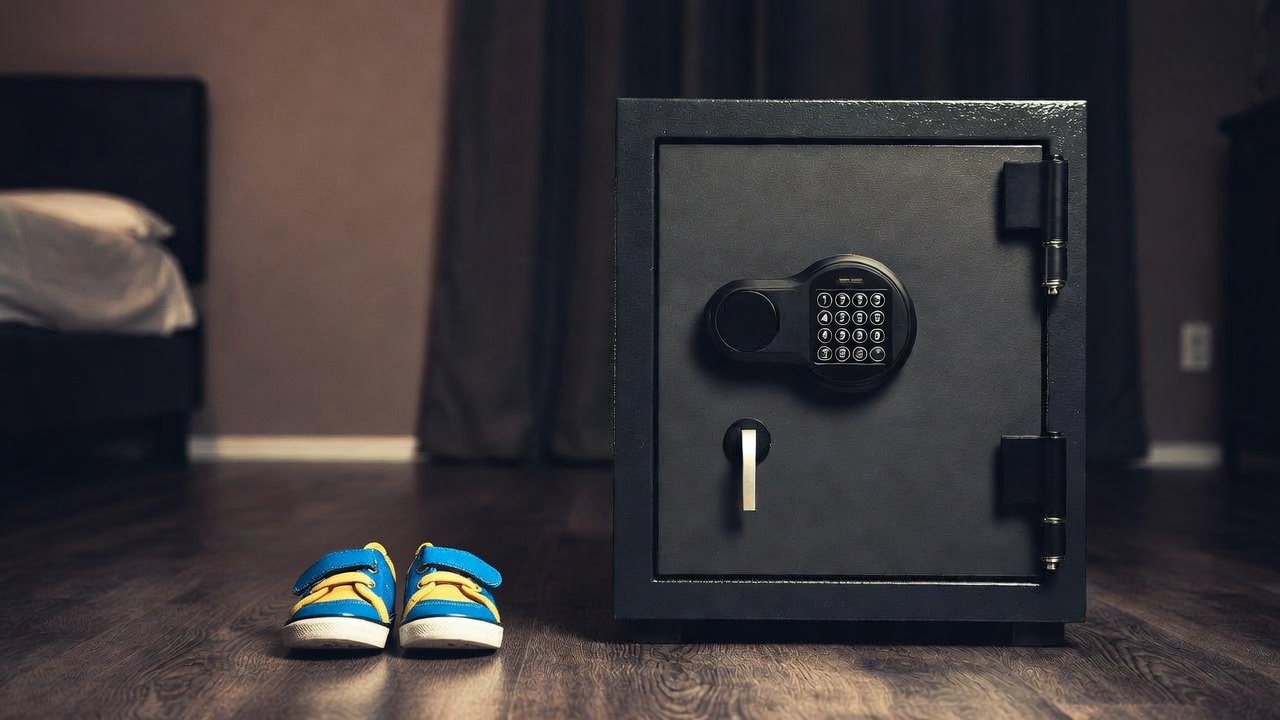
According to court records obtained by ABC 6, the child’s father, Deshawn Butler, reportedly told detectives he had gone to secure a firearm in a gun safe but was distracted by his toddler’s behavior and did not close the safe door completely. Moments later, he reportedly heard a gunshot. Butler initially fled the scene before turning himself in at Columbus Police Headquarters hours later. He was initially charged with felony child endangering. He has since been federally charged with illegally possessing a firearm as a previously convicted felon. As with all criminal matters, the charges against Butler are allegations; no finding of guilt has been made in court.
Jashawn was 21 months old. He was in his own home.
What ‘Secured’ Actually Means
This death is preventable. That word matters here, because the mechanism of this tragedy is one early childhood professionals encounter in conversation with families regularly: a gun owner who believes a firearm is secured when it is not.
A safe protects a child only when it is fully closed, locked, and verified. The American Academy of Pediatrics and the CDC recommend storing firearms unloaded and locked, with ammunition secured separately and inaccessible to children. As an additional practical step, adults should physically confirm that the safe or lockbox is fully closed and locked rather than assuming the door has engaged.
A toddler’s curiosity is developmentally normal. Because adult distraction is also predictable, storage systems must prevent a single missed step from giving a child access. This case illustrates why a storage system should not depend on one easily missed step. Layered prevention means no single point of failure puts a child at risk.
The Pattern Behind This Incident
Court records reviewed by ABC 6 also describe prior allegations, charges, or incidents involving violence, including events in 2021 and 2022 and an alleged threat of violence involving another child in February 2025. Franklin County Children Services confirmed to ABC 6 that the agency was not actively working with the family at the time of Jashawn’s death.
Domestic violence and unsecured firearms in the same household represent a recognized, compounding risk to child safety. If you are working with a family where domestic violence may be present, firearm access is part of the safety picture — but your role is not to investigate or directly confront anyone in a way that could increase danger.
Your program’s responsibility in these situations is to follow your established reporting, confidentiality, and safety protocols; speak with caregivers privately and only when it is safe to do so; consult your supervisor or a qualified domestic-violence partner organization; document your objective observations accurately; and prioritize the safety of children and adult survivors above all else. You are not conducting an investigation. You are fulfilling your duty of care and connecting families to the supports they need.
What Your Program Can Do
Firearm safety conversations belong in your family engagement work — alongside car seat safety, safe sleep, and poison prevention. Here is a concise checklist your program can act on now:
- Add secure-storage information to your family-safety materials. Include it in enrollment packets, health screenings, and home visitor protocols. The information does not need to be political. Frame it around the same principle you use for medications and cleaning supplies: anything that can harm a child must be stored to prevent unauthorized access by a child.
- Train staff to use neutral, nonjudgmental language. Teachers and home visitors sometimes hesitate to raise firearm storage because they anticipate conflict. A brief, prepared statement normalizes the conversation: “We talk with all our families about keeping things that can hurt children out of reach — medications, cleaning products, and firearms. Is everything stored securely at home?” That framing is factual, consistent, and non-accusatory. Practice it until it feels routine.
- Include firearm storage in home visit safety protocols. Home visitors are often the staff members with the most direct view into a family’s living environment. Your home visit protocols should include a prompt to observe and, where appropriate, gently raise storage of hazardous items — firearms included. This is not surveillance. It is the same duty of care that drives every other safety check your visitors conduct.
- Know your local resources. Your state’s child welfare agency, local pediatricians, and organizations like the Brady Campaign offer free secure-storage materials and, in some areas, free or low-cost gun locks. Have those resources on hand before the conversation, not after.
A Word About Infant and Toddler Vulnerability
Infants, toddlers, and children cannot assess risk. They cannot read warning labels. They cannot understand that a small, heavy object on a shelf is lethal. That is not a failure of parenting or child development — it is biology. And it is precisely why the protective systems adults build around them must be robust enough to survive a moment of distraction. One interrupted task, one door not fully closed, one assumption — and the margin is gone.
Jashawn Butler did not have the developmental capacity to understand what he found. The system around him had a single point of failure. That is the lesson this case leaves for every professional working with young families.
The Conversation Is Already Yours to Lead
Early childhood professionals have trusted relationships with families. You see caregivers at drop-off, during home visits, and at family events. Those relationships create opportunities to share practical safety information before a crisis occurs.
Building a culture of safety means reinforcing protective practices both inside the program and at home. Secure firearm storage is a family-safety issue, and it belongs alongside conversations about safe sleep, medications, cleaning products, car seats, and other household hazards.
ICP has built two free resources specifically to support this work. The first is a free course for parents — Gun and Firearm Safety for Parents — developed as part of our Protecting Children Series in partnership with Dr. Guzman, a world-leading expert in preventing firearm death among children. The course features the outstanding work of the Aim for Safety initiative from Cook Children’s Hospital in Texas. Share it directly with the families you serve: institute-for-childhood-preparedness.teachable.com/p/gun-and-firearm-safety-for-parents.
The second is Firearm Safety with Aim for Safety, a free course built for early childhood educators — also developed in partnership with Dr. Guzman and Cook Children’s Hospital’s Aim for Safety initiative. It gives your staff the language, context, and confidence to raise secure storage with families as a routine part of safety conversations. Access it at institute-for-childhood-preparedness.teachable.com/p/aimforsafety.
ICP’s Emergency Preparedness training helps early childhood programs turn emergency plans, evacuation, shelter-in-place, drills, and reunification procedures into usable routines. Our Home Visit Safety training gives home visitors, family advocates, and supervisors practical safety practices for working safely in the field. Both are designed specifically for early childhood professionals. Visit icp.us/training to explore all available training options.
Jashawn Butler was 21 months old. His death was preventable.
Don’t be scared. Be prepared.