
No simulated violence
The training is built around calm decisions, clear roles, and emotional safety. We do not use simulated gunfire or staged violence.
Bees to the Beehive®
Bees to the Beehive® is the signature method at the heart of a complete ICP engagement — assessments, staff training, a leadership tabletop, and ongoing access.
The method
Bees to the Beehive® is ICP's age-appropriate method for identifying and practicing lockdown concealment locations. It gives staff and children a calm, shared language and a shared destination — without frightening words or fear-based drills.
Bees go to the beehive. Children already understand it, staff can teach it in a sentence, and every room in your program gets a designated place to go.
A culture of safety
True readiness isn't something you schedule once — it's a culture your whole organization lives. That's why we built a comprehensive engagement around the Bees to the Beehive® method: we get to know your buildings, train every staff member, practice decisions with leadership, and keep new hires ready as your team changes. The result is preparedness that takes root and stays.
The training promise
Active threat training can be handled responsibly. Bees to the Beehive® gives teams a shared decision language while protecting the emotional safety of staff and children.
The training is built around calm decisions, clear roles, and emotional safety. We do not use simulated gunfire or staged violence.
Preparedness should not depend on startling staff or children. Bees is taught in a planned, respectful learning environment.
The goal is confidence, not panic. Staff leave with shared language they can remember when a situation feels uncertain.
 How an engagement works
Every engagement follows the same arc, shaped around your facilities, staffing, and community.
We learn your facilities, staffing model, and community context before recommending anything. The plan fits your program — not a template.
Staff complete foundational courses on ICP's learning platform — each with their own login, available 24/7, with completion tracking for your records.
Trainers visit each center to evaluate the physical environment, access points, vulnerabilities, and existing procedures — producing site-specific findings and recommendations generic training can't replicate.
What the assessment includes →The signature Bees to the Beehive® session, taught in person at each location and adapted to your real rooms, routines, and roles.
A focused exercise for program leadership that stress-tests your organizational and community plans — intentionally surfacing gaps before they ever matter.
LMS access continues, so new hires onboard fully trained — keeping your program ready as your team changes.
What staff learn
The training connects preparedness concepts to the real places where early childhood teams work every day. Staff do not need a security background to understand what matters.
Free for your classrooms
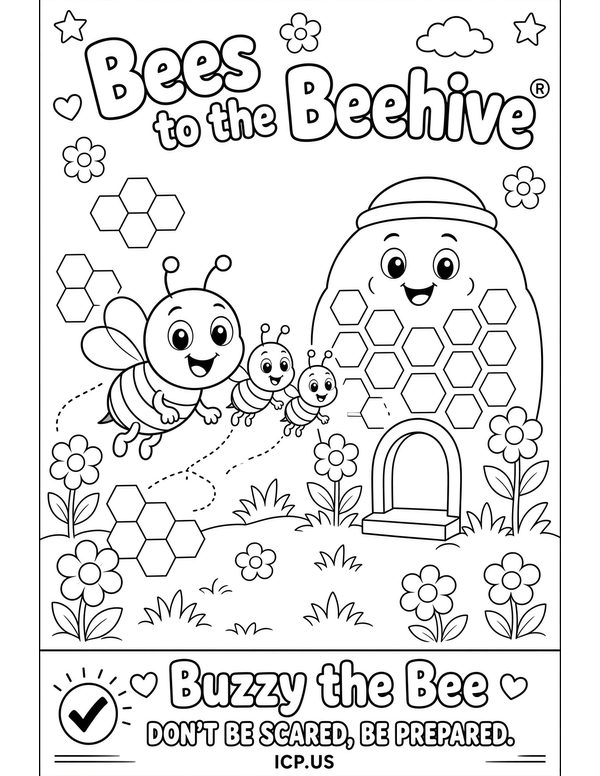
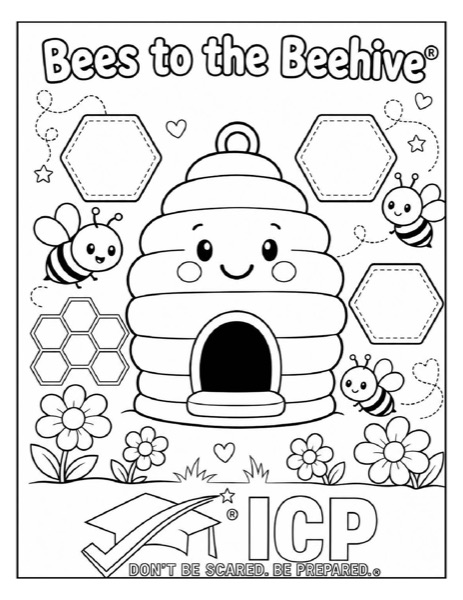
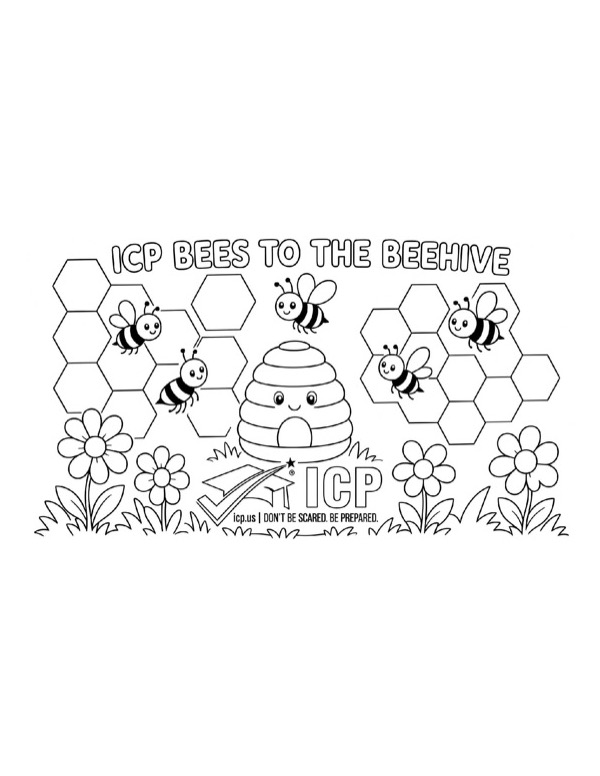
Free Bees to the Beehive® coloring sheets for early childhood programs. They can be used during calm practice, or as a simple way to introduce the idea of moving to a safe place — without using frightening language.
See all free printables →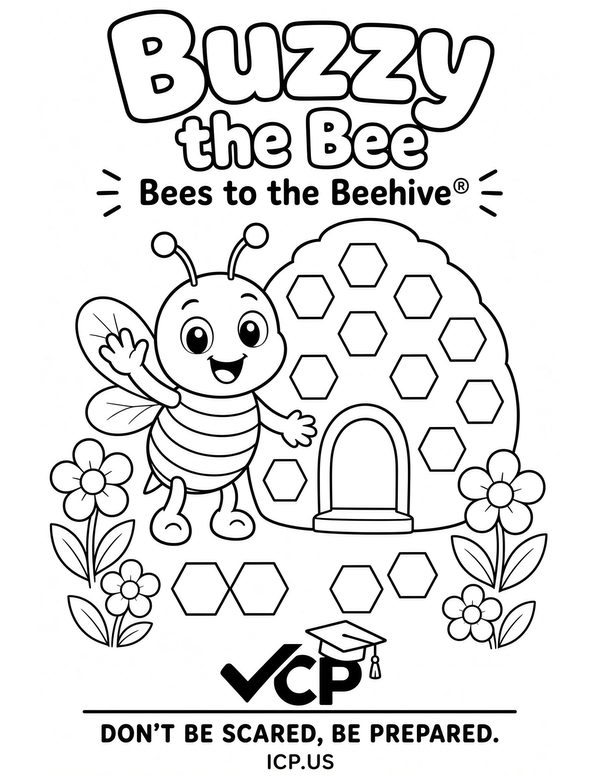
Built for your setting
A standalone center, a program inside a shared school building, and an agency with sites scattered across a rural county each need a different plan. Every engagement is built around your facilities, layouts, staffing, and community.
A broader preparedness program
Engagements are often bundled with complementary topics so your program builds preparedness across every part of its work.
Stay safe in the field — planning visits, reading environments, and responding when situations get uncomfortable.
Recognize escalating behavior and safely defuse difficult interactions with parents and visitors.
Identify potential safety risks before they escalate and build awareness into daily routines.
The Fire Triangle, PASS, and RACE — plus how to drill so the children actually remember it.
Build safety into the everyday life of your program — drills, visitor management, and family communication.
Protect children, families, and your program from digital threats — no IT team required.
Training formats
ICP can help shape timing and scope during the request process.
A focused staff training for one site, a multi-site system, or a regional audience.
A strong fit for Head Start, CCR&R, association, and early childhood conference programming.
Adapt the examples, timing, and discussion prompts around your facilities, staff roles, and goals.
Ready to talk?
Tell us about your program, audience size, and goals. We will help identify the right format and next step.