
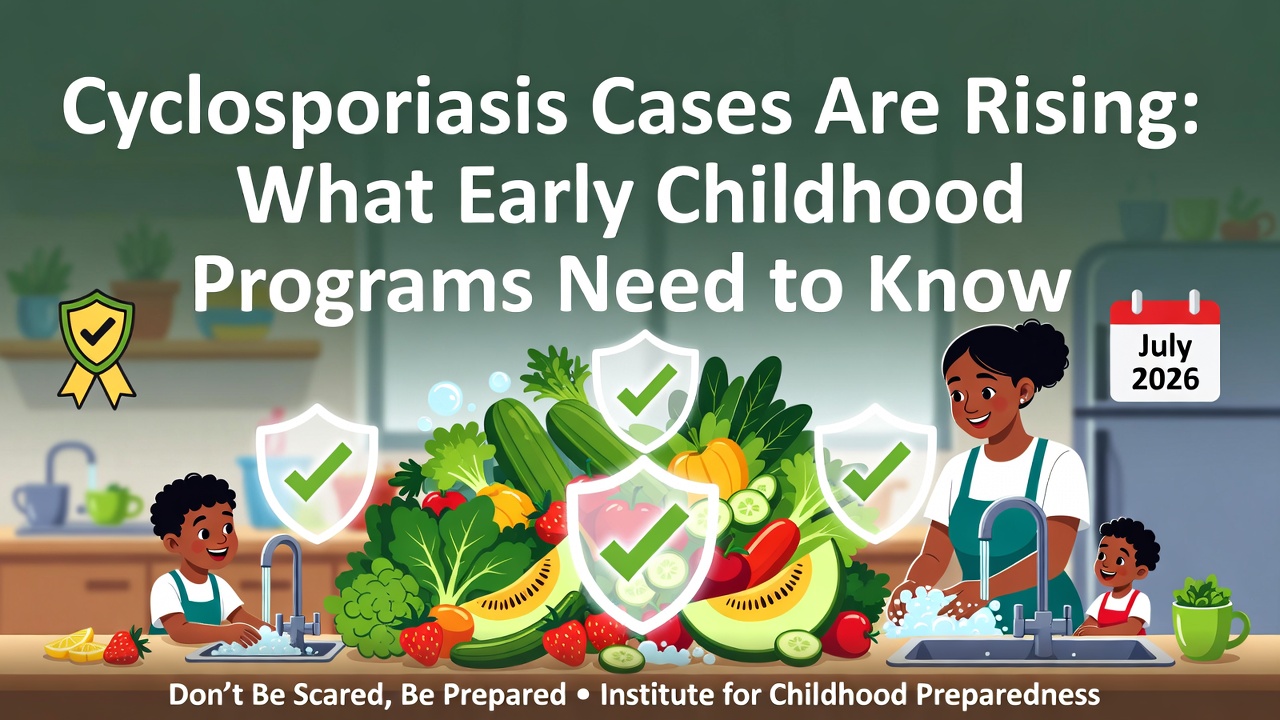
Cyclosporiasis has been appearing in headlines across the country. For early childhood professionals, the increase is an important reminder to review food-safety practices, recognize signs of illness and share reliable information with families.
There is no need to panic or stop serving fresh fruits and vegetables. Instead, programs should focus on practical steps that can lower risk.
As we often say at the Institute for Childhood Preparedness: Don’t be scared, be prepared.
Why is cyclosporiasis in the news?
On July 14, 2026, the Centers for Disease Control and Prevention issued a Health Alert Network advisory about a large increase in cyclosporiasis cases acquired within the United States.
Between May 1 and July 13, the CDC received reports of 1,645 confirmed cases in 34 states. Another 5,100 possible cases were still being reviewed. Among the confirmed cases with available information, 141 people were hospitalized. No deaths had been reported. This was a major increase from the 249 cases reported by the same time in 2025. (CDC)
Public health officials are investigating several groups of illnesses. One large outbreak includes more than 400 reported cases connected to Michigan, Ohio, West Virginia and Kentucky. As of July 15, investigators had not confirmed a specific food as the source. (CDC)
Because the investigation is continuing, early childhood programs should follow updates from the CDC and their state or local health department.
What is cyclosporiasis?
Cyclosporiasis is an intestinal illness caused by a tiny parasite called Cyclospora. People can become infected after eating food or drinking water contaminated with the parasite.
In the United States, past outbreaks have often been connected to fresh produce. However, a specific food should not be blamed unless health officials identify it as part of an outbreak.
Cyclosporiasis is not normally passed directly from one person to another. After leaving the body, the parasite generally needs at least one to two weeks in the environment before it can infect someone else. (CDC)
Good handwashing is still essential in early childhood settings. It helps prevent many illnesses and lowers the chance that germs or contamination will reach food during preparation and service.
Symptoms to keep on your radar
Symptoms usually begin about one week after exposure, but they may appear anywhere from two days to two weeks or longer afterward.
The most common symptom is frequent, watery diarrhea. Other symptoms may include:
- Loss of appetite
- Stomach cramps or bloating
- Nausea
- Tiredness
- Weight loss
- Excess gas
- Low fever
- Vomiting
- Headache or body aches
One important clue is that the illness may last longer than a typical stomach bug. Symptoms can improve and then return several days or weeks later. Without treatment, some people may remain sick for a month or longer. (HealthyChildren.org)
When should families seek medical care?
Families should contact a healthcare provider when a child has severe watery diarrhea, diarrhea lasting more than a few days, signs of dehydration, unexplained weight loss, ongoing vomiting, fever with diarrhea or symptoms that improve and then return.
Urgent medical attention may be needed if a child cannot keep liquids down, is unusually difficult to wake or shows signs of serious dehydration. Children with weakened immune systems may be more likely to experience a severe or longer-lasting illness. (HealthyChildren.org)
Testing is important because routine stool tests do not always check for Cyclospora. A healthcare provider may need to specifically request the test, and more than one sample may sometimes be required. (CDC)
The recommended treatment is a prescription medicine called trimethoprim-sulfamethoxazole, also known as TMP-SMX. Treatment decisions must be made by a qualified healthcare provider. Drinking enough fluids is also important because diarrhea can quickly lead to dehydration, especially in young children. (CDC)
What early childhood programs can do now
Review food-preparation practices
Wash fresh fruits and vegetables thoroughly under running water before eating, cutting or cooking them. Produce should be washed even when its package says it was pre-washed.
Use a clean produce brush to scrub firm items such as cucumbers and melons. Cut away bruised or damaged areas, and refrigerate cut, peeled or cooked produce within two hours. (CDC)
Careful washing may not remove every Cyclospora parasite, but it can help reduce risk. Cooking food thoroughly kills the parasite. (HealthyChildren.org)
Strengthen handwashing routines
Staff should wash their hands with soap and water before preparing, serving or eating food. Children should also be helped to wash their hands before meals and snacks.
Handwashing should never replace proper produce preparation. Both steps are part of a strong food-safety plan.
Watch for patterns of illness
One case of diarrhea may have many possible causes. However, several similar illnesses or diarrhea that continues for more than a few days deserves attention.
Follow your program’s illness policy, document symptoms and notify the appropriate health authorities when required. Encourage families to speak with a healthcare provider and mention the possibility of Cyclospora when symptoms match the warning signs.
Review policies with staff and families
Use this news as a teachable moment. Review:
- Handwashing procedures
- Produce washing and storage
- Kitchen cleaning routines
- Safe drinking-water practices
- Illness reporting and exclusion policies
- Steps for contacting the local health department
Remember “family first.” Talk about these same practices with children, parents, grandparents and other caregivers in your own family.
Keep fresh foods on the menu
Fresh fruits and vegetables are an important part of a healthy diet. The current increase in cyclosporiasis cases does not mean families and programs should stop eating or serving produce.
The better response is to stay informed, follow sound food-safety practices and watch for symptoms that may require medical attention.
Review the CDC and American Academy of Pediatrics information. Put the recommendations into action. Then share these trusted resources through your program’s email, family communication app or social media pages.
Prepared programs do not respond with fear. They respond with good information, practiced procedures and calm leadership.
Don’t be scared, be prepared.
This article is for educational purposes and does not replace medical advice. Contact a healthcare professional with questions about symptoms, testing or treatment.