When a father in Yogyakarta, Indonesia, noticed his three-year-old daughter crying hysterically before daycare every morning, he assumed she simply wanted to stay home and play. He had no idea that police would later allege she was one of dozens of children physically abused at the facility.
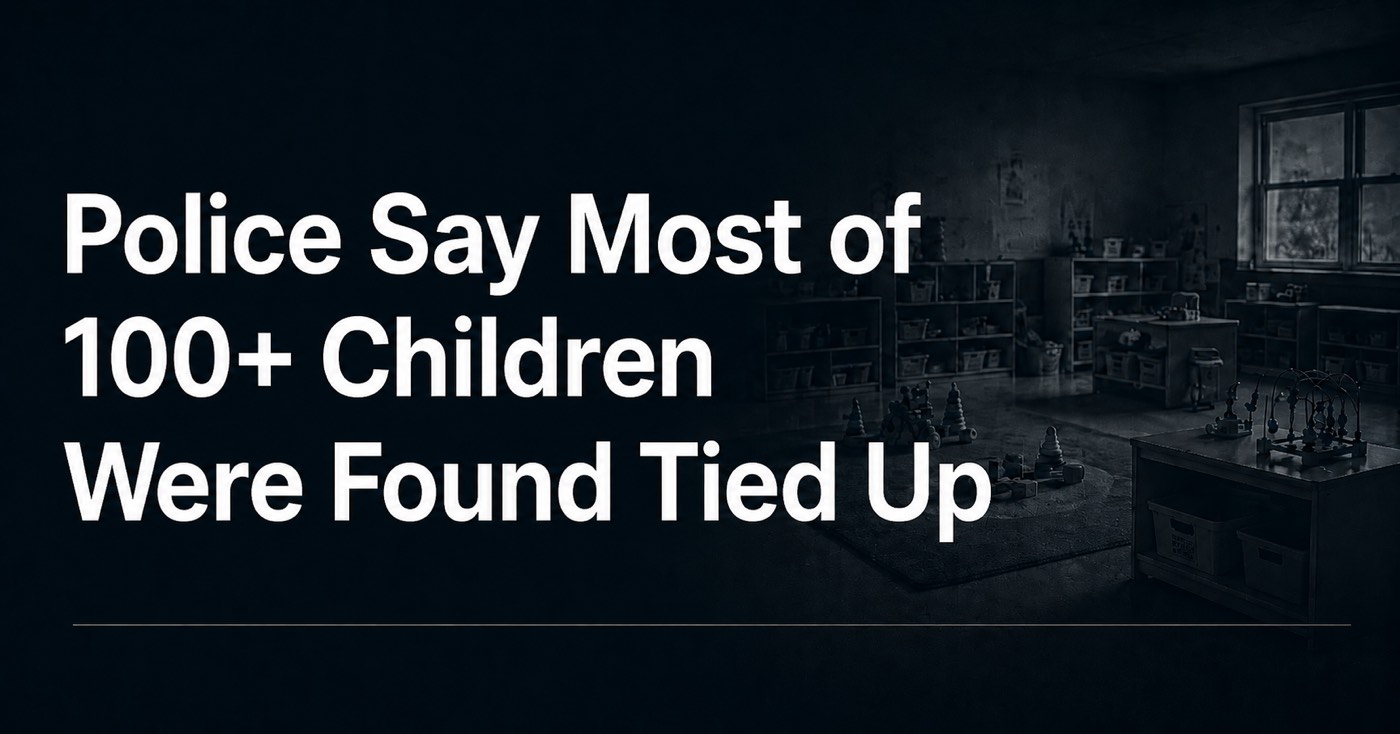
In late April 2026, Indonesian police raided the Little Aresha daycare center after a former caregiver came forward as a whistleblower and filed a complaint. What investigators described finding was staggering. According to the head of child protection at Yogyakarta’s police criminal investigation unit, most of the more than 100 children enrolled at the center were found with their hands and feet bound. Some children were tethered to doors. Investigators from Indonesia’s child protection agency reported that many of the children, who ranged in age from two to six, were routinely slapped and pinched. Caregivers allegedly told police the physical punishment was intended to make the children “more manageable.”
Thirteen staff members were arrested on suspicion of child abuse and neglect, including the owner, the principal, and caregivers. Police also said the center had been operating without required licenses since it opened in 2018, despite being one of the more expensive daycare options in the city.
The case has sparked public outrage across Indonesia and drawn international media coverage. Indonesia’s Minister for Women’s Empowerment and Child Protection called for a national review of daycare standards. Government data cited in media reports suggests that nearly half of Indonesia’s daycare services may be operating without permits or legal status.
This story is difficult to read. It should be. But for early childhood professionals, it also carries lessons that deserve serious attention — not just this week, but every week.
This Is Not Just an International Story
It would be easy for American child care programs to read about this case and think it could not happen here. The regulatory environment in the United States is different. Licensing systems exist in every state. But the underlying failures in this case are not unique to Indonesia. They are universal risks that any program can face if daily safety systems break down.
The children at Little Aresha were harmed not because of a single catastrophic event, but because of a pattern. Unlicensed operation. Inadequate oversight. A culture where physical punishment became normalized. Staff who either participated or stayed silent. Families who noticed behavioral changes in their children but had no way to understand the cause.
Every one of those conditions is preventable. And preventing them is exactly what a culture of safety is designed to do.
At the Institute for Childhood Preparedness, we train early childhood programs to build that culture from the inside out — not through fear, but through systems, awareness, accountability, and daily practice. Our Creating a Culture of Safety training was designed specifically for this purpose: helping programs move beyond compliance checklists and into a genuine, living safety culture where problems are identified early and addressed before they compound.
What Went Wrong — and What Programs Should Be Asking Themselves
Several specific failures in this case map directly to areas that every early childhood program should be reviewing on a regular basis.
The center was operating without required licenses. This is the most basic layer of accountability in child care, and it was missing entirely. Programs should confirm that all licenses, inspections, background checks, and staff training records are current, accessible, and reviewed regularly. If a licensing visit happened tomorrow, would everything be in order?
Physical punishment was used as a behavior management strategy. Restraint, hitting, pinching, humiliation, and isolation have no place in early childhood care under any circumstances. Staff need clear policies on appropriate guidance practices and training in how to manage challenging behavior without resorting to force. ICP’s De-escalation Techniques for Early Childhood Professionals course teaches practical communication strategies that help staff manage tense situations with children, parents, and colleagues while maintaining professionalism and safety.
The abuse reportedly went on for years without detection. The center had been open since 2018. That means the systems designed to catch problems — whether internal oversight, licensing inspections, or family communication — either did not exist or did not function. Leaders should ask themselves: are there spaces in my program where a pattern of concern could develop without anyone noticing? Are classrooms visible? Are walkthroughs happening? Is staff behavior being observed, not just assumed?
A whistleblower brought the abuse to light — not a supervisor, not a licensing visit, not a parent complaint. The fact that it took a former caregiver going to police to expose what was happening tells you everything about the internal culture of that program. In a strong safety culture, staff feel empowered and expected to speak up when something is wrong. Reporting should never depend on courage. It should be routine, supported, and protected. Every staff member at every level should know exactly how to report a concern and trust that doing so will be taken seriously.
Parents noticed behavioral warning signs but did not connect them to abuse. The father in this story described his daughter’s distress as a normal reluctance to go to daycare. Young children often cannot articulate what is happening to them, which means the adults around them need to be alert to changes in behavior: sudden fear of going to care, unexplained injuries, sleep disruptions, regression, extreme distress at drop-off, or significant changes in mood or eating patterns. These signs do not automatically indicate abuse, but they always deserve calm, prompt attention. Our Situational Awareness for Child-Serving Professionals training helps staff develop the observation skills to recognize when something in their environment has shifted and to act on that recognition before a situation worsens.
A Prepared Program Does Not Wait for a Crisis
Preparedness is not a binder on a shelf. It is not a policy manual that gets reviewed once a year. It is a daily practice that lives in how a program operates every single morning, afternoon, and evening.
A prepared program has staff who know the reporting process and are not afraid to use it. It has leaders who walk through every classroom regularly and look at the environment the way a parent would. It has families who feel genuinely welcome to ask questions, visit unannounced, and raise concerns without fear of retaliation. It has policies that are practiced, not just posted.
This same foundation applies whether a program is preparing for a medical emergency, a severe weather event, a missing child, a reunification scenario, or an active threat. The systems are the same: clear plans, trained people, practiced procedures, and calm leadership under pressure.
That is the foundation every ICP training is built to strengthen. Our courses are not adapted from law enforcement, retail, or K–12 settings. They are designed from the ground up for the realities of caring for infants, toddlers, preschoolers, and young school-age children in early childhood environments.
What Early Childhood Leaders Can Do This Week
Use this story as a catalyst. Share it with your leadership team. Discuss it at your next staff meeting. And take concrete action.
Review your child guidance and discipline policy with every staff member. If the policy has not been revisited in the past year, schedule a meeting this week to walk through it together. Make sure everyone understands what is expected and what is never acceptable.
Verify that all licensing, inspection, and training records are current. Assign someone to confirm that every required document is where it should be and that nothing has lapsed or is approaching expiration.
Walk through every classroom and care area with fresh eyes. Look at the environment the way a visiting parent or licensor would. Are there blind spots? Are ratios being maintained throughout the day — including during transitions, outdoor play, and nap time? Is supervision consistent and active?
Confirm that every staff member knows how to report suspected abuse, neglect, or unsafe conduct. Include substitutes, floaters, and new hires. Make sure the process is simple, accessible, and supported by leadership.
Reach out to families. A short message in your newsletter or a note posted at drop-off reminding families that they are welcome to ask questions about safety policies and supervision practices builds trust and signals that your program takes transparency seriously.
Schedule a tabletop exercise around a realistic child safety scenario. Walking through a scenario as a team, in a low-pressure learning environment, is one of the most effective ways to identify gaps before they become real problems. ICP offers tabletop exercises and safety planning support to help programs do exactly this.
Preparedness Creates Confidence, Not Fear
This story is horrifying. There is no softening that. But the right response for early childhood professionals is not panic. It is action.
When programs invest in training, accountability, and communication, they send a clear message to families: your child’s safety is our highest priority. That message is not delivered through a poster on the wall. It is delivered through the way a program operates every day.
Don’t be scared. Be prepared.
Bring ICP Training to Your Program
The Institute for Childhood Preparedness delivers training built specifically for early childhood professionals. Our courses include Creating a Culture of Safety, Active Threat Preparedness, De-escalation Techniques, Situational Awareness, Fire Safety, Home Visit Safety, and Legal Preparedness for Early Childhood Leaders.
Whether you need a single workshop for your team, a full-day professional development event, a safety summit for your network, or a tabletop exercise to stress-test your emergency plans, ICP can help.
Andy Roszak, JD, MPA, EMT-Paramedic, is the Founder and Chief Executive Officer of the Institute for Childhood Preparedness. A former firefighter, hazmat technician, and public health professional, Andy has dedicated his career to helping child-serving organizations build practical safety and preparedness systems. He is the author of the award-winning Preparing for the Unexpected book series and delivers training to early childhood programs across the country.